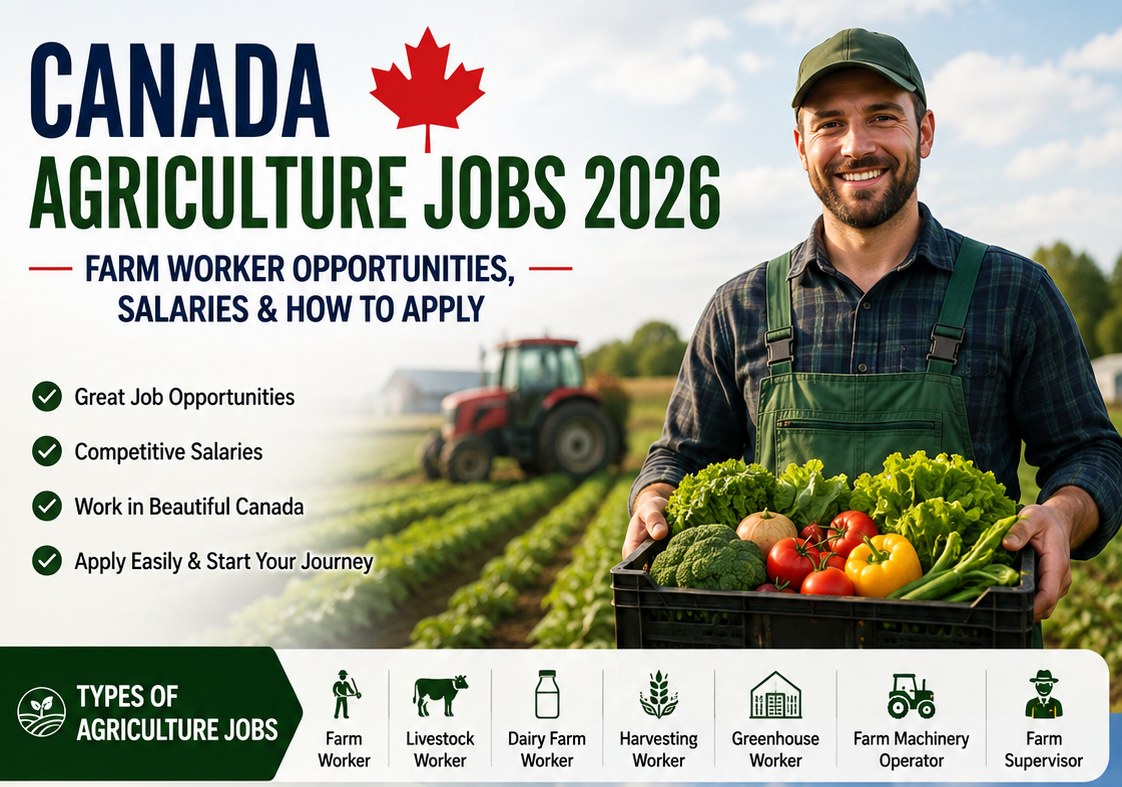
Canada’s farms, ranches, and food-processing plants are short-staffed — and that gap is opening real doors for job seekers. If you’re weighing a move into Canada agriculture jobs, this guide breaks down what the roles actually pay, which provinces are hiring hardest, and the exact steps to land a position in 2026, whether you’re a local applicant or applying from abroad.
[Image placeholder 1 — alt text: “Farm worker operating machinery on a Canadian wheat field”]
Why Canada’s Agriculture Sector Is Hiring Right Now
Canada’s agricultural workforce has been shrinking for years, and that’s created sustained demand for new workers. Statistics Canada’s Labour Force Survey shows agricultural employment fell from 277,700 workers in June 2020 to about 225,000 in June 2026, a 19% drop over six years.
The Canadian Agricultural Human Resource Council (CAHRC) puts a dollar figure on what that shortage costs the country. Its research found that more than 28,200 agricultural jobs went unfilled during peak season in 2022 alone, and the resulting labour shortage cut sector sales by an estimated $3.5 billion.
The gap is projected to widen. CAHRC’s long-range forecast estimates that the fruit and vegetable industry could need to fill more than 35,000 positions during peak season by 2030, and warns that an aging farm workforce could see roughly 30% of current workers retire by the same year. Industry leaders have also flagged that this isn’t only a staffing problem — CAHRC’s executive director told a Senate committee that unfilled farm and processing jobs directly threaten Canada’s food supply chain, since crops go unharvested and processing slows without enough workers.
What this means for you: employers are actively recruiting, wages are climbing to attract applicants, and multiple immigration pathways exist specifically because Canada cannot fill these roles domestically.
Types of Agriculture Jobs in Canada
“Agriculture jobs” covers a much wider range of work than most people expect — from physical field labour to highly technical, tech-driven careers.
1. General Farm Labourers and Farmworkers
Entry-level roles involving planting, harvesting, irrigation, and equipment operation. These are the most common openings and the easiest to enter without formal Canadian credentials.
2. Livestock and Dairy Workers
Feeding, milking, herd health monitoring, and barn management on dairy, poultry, and cattle operations. Many of these roles run year-round rather than seasonally.
3. Farm and Agricultural Equipment Technicians
As farms modernize with GPS-guided tractors and automated systems, demand for technicians who can maintain and repair precision equipment has grown steadily.
4. Agronomists and Crop Consultants
Degree-holding specialists who advise on soil health, pest management, and crop yield optimization. This is one of the higher-paying, credential-dependent tracks in the sector.
5. Agricultural Equipment Operators
Skilled operators of combines, seeders, sprayers, and grain handling equipment, often paid at a premium during planting and harvest seasons.
6. Food Scientists and Quality Control Specialists
Roles in food safety, processing plant quality assurance, and product development — a growing category as Canada’s agri-food processing sector expands.
7. Farm and Ranch Managers
Operational leadership roles overseeing budgets, staffing, and production planning on mid-to-large operations.
8. Agribusiness and Supply Chain Roles
Sales, logistics, and data analytics positions supporting the business side of farming — one of the sector’s fastest-growing white-collar tracks.
[Image placeholder 2 — alt text: “Agronomist inspecting crop samples in a Canadian field”]
Average Salaries for Agriculture Jobs in Canada (2026)
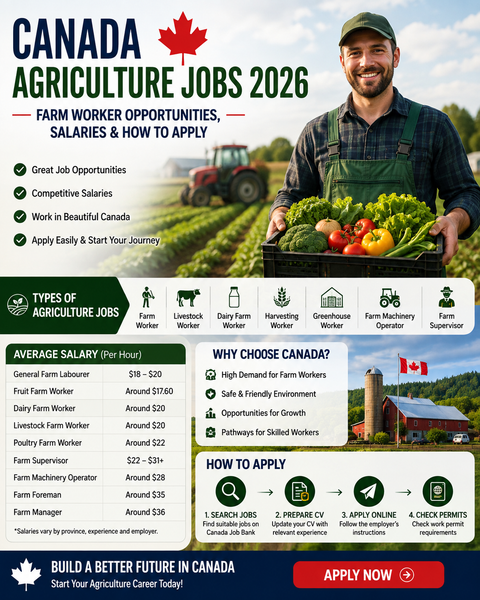
| Role | Typical Annual Salary Range (CAD) |
|---|---|
| General Farm Labourer | $32,000 – $42,000 |
| Livestock/Dairy Worker | $35,000 – $46,000 |
| Equipment Operator | $38,000 – $55,000 |
| Farm Equipment Technician | $45,000 – $65,000 |
| Agronomist | $55,000 – $85,000 |
| Farm/Ranch Manager | $60,000 – $95,000 |
| Food Scientist | $58,000 – $90,000 |
Wages vary by province, employer, and season. Some operations are already paying well above entry-level averages to compete for scarce labour — one Manitoba grain farm was reported paying skilled production labourers around $35 per hour, well above typical entry wages, specifically because qualified Canadian applicants were hard to find.
Which Provinces Have the Most Agriculture Job Openings?
- Ontario — Canada’s largest fruit, vegetable, and greenhouse production base, with year-round processing plant demand.
- Alberta — Cattle ranching, grain farming, and large-scale equipment operator roles.
- Saskatchewan and Manitoba — Grain and oilseed production, with strong seasonal and full-time openings.
- British Columbia — Fruit orchards, vineyards, and greenhouse operations, particularly in the Okanagan Valley and Fraser Valley.
- Quebec — Dairy, maple production, and a growing agri-food processing sector.
How to Find and Apply for Agriculture Jobs in Canada
- Search dedicated agriculture job boards such as AgCareers.ca, Job Bank (the Canadian government’s official listing site), and provincial agriculture ministry career portals — not just general job sites.
- Check with sector-specific organizations like the Canadian Agricultural Human Resource Council, which tracks vacancies and connects employers with candidates.
- Apply directly to farms and agribusinesses during hiring season (typically February–April for spring roles), since many operations fill positions before listings go public.
- Get relevant certification where it applies — a pesticide applicator’s licence, forklift/equipment certification, or a food safety credential can make an entry-level application far more competitive.
- For applicants outside Canada, review the Temporary Foreign Worker Program (TFWP) Agricultural Stream and the Agri-Food Pilot, which exist specifically to place foreign workers into unfilled Canadian farm and processing roles.
[Image placeholder 3 — alt text: “Job seeker reviewing agriculture job listings on a laptop”]
Work Permits and Immigration Pathways for Foreign Agriculture Workers
Because Canada relies heavily on international labour to keep the sector running, foreign workers already represent a significant share of the agricultural workforce, and multiple immigration programs are built around this need:
- Temporary Foreign Worker Program (TFWP) – Agricultural Stream: For employers hiring for specific farm occupations like general farm workers, harvesters, and equipment operators.
- Seasonal Agricultural Worker Program (SAWP): A long-running program connecting workers from Mexico and Caribbean countries with Canadian farms for seasonal contracts.
- Agri-Food Pilot: A pathway allowing experienced temporary foreign workers in select agri-food occupations to apply for permanent residence.
- Provincial Nominee Programs (PNPs): Several provinces, including Saskatchewan and Manitoba, run streams that prioritize agricultural and food-processing occupations.
Always verify current eligibility requirements on the official Immigration, Refugees and Citizenship Canada (IRCC) website before applying, as program rules and caps change periodically.
Skills and Qualifications Employers Look For
- Physical stamina and comfort working outdoors in variable weather
- Basic mechanical aptitude for equipment operation and maintenance
- Willingness to work early hours and seasonal overtime
- For technical/managerial roles: a diploma or degree in agriculture, agronomy, or agribusiness
- Valid driver’s licence (often required for equipment and delivery roles)
- English or French communication skills sufficient for safety training
Challenges to Know Before You Apply
- Seasonality: Many field roles run only during planting and harvest months, though livestock, greenhouse, and processing jobs tend to be year-round.
- Physical demands: Field and livestock work is physically intensive and often outdoors in heat, cold, or rain.
- Remote locations: Many farm jobs are located outside major cities, so housing and transportation should be confirmed before accepting an offer.
- Wage variation: Pay differs significantly by province, employer size, and whether the role is unionized or unionization is even applicable.
Frequently Asked Questions
Is it hard to get an agriculture job in Canada? Entry-level farm labour roles are generally easier to secure than most sectors right now because of the ongoing worker shortage. Technical and managerial roles requiring credentials are more competitive.
Do I need Canadian experience to work in agriculture in Canada? Not usually for entry-level field and labour roles. Employers hiring through the Temporary Foreign Worker Program often prioritize willingness to work and physical capability over prior Canadian experience.
What is the average salary for a farm worker in Canada? Entry-level general farm labourers typically earn between $32,000 and $42,000 CAD annually, though hourly rates can be significantly higher during peak season in labour-short regions.
Can foreign workers apply for permanent residence through agriculture jobs? Yes. The Agri-Food Pilot and several Provincial Nominee Program streams offer pathways to permanent residence for workers in eligible agricultural occupations.
Which Canadian province has the most agriculture jobs? Ontario, Alberta, and Saskatchewan consistently post the highest number of agricultural job openings due to the scale of their farming and processing sectors.
Final Thoughts
Canada’s agriculture labour shortage isn’t a short-term blip — it’s a structural gap driven by an aging workforce and low domestic uptake of farm careers. For job seekers willing to do physical, seasonal, or rural work, that shortage translates into real opportunity: multiple entry points, rising wages, and, for international applicants, dedicated immigration pathways built specifically to fill these roles. Start with a sector-specific job board, confirm the right permit pathway if you’re applying from abroad, and target the provinces with the deepest hiring needs.