
Tourism is one of Portugal’s largest industries, and it produces job openings all year round — from seasonal hotel and restaurant roles in the Algarve to year-round positions at major hospitality groups in Lisbon and Porto. This guide breaks down what these jobs actually pay, where the hiring is concentrated, and exactly how to land a role whether you’re looking for a summer season or a long-term hospitality career.
[Image placeholder 1 — alt text: “Hotel reception staff welcoming guests at a resort in the Algarve”]
Why Tourism Is One of Portugal’s Biggest Employers
Tourism ranks among Portugal’s most important industries, generating steady demand for hospitality workers across hotels, restaurants, resorts, and tour operations throughout the country. The Algarve region — covering Faro, Lagos, Albufeira, Portimão, and Tavira — tops the list for hospitality hiring specifically, driven by its concentration of hotels, golf resorts, and beach tourism.
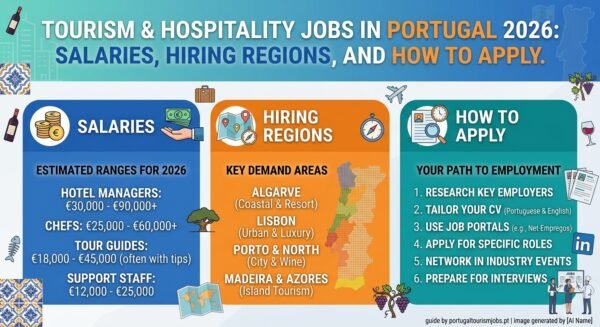
Hiring peaks from spring to autumn in most coastal and resort areas, with many seasonal roles in hotels, restaurants, and resorts, some of which include staff accommodation as part of the offer. English-speaking jobs are common in tourist-heavy areas, and many roles need little or no Portuguese — a genuine advantage for foreigners without local language skills looking for an entry point into Portugal’s job market.
Types of Tourism and Hospitality Jobs Available in Portugal
1. Hotel Front Desk / Reception
One of the most common entry-level roles, handling check-in, guest services, and reservations — often requiring English and at least one additional language in international resort areas.
2. Housekeeping
Widely available across hotels and resorts, physically demanding but requiring minimal language skills or prior experience.
3. Restaurant and Bar Staff
Waitstaff, bartenders, and food runners — in high demand throughout tourist regions, particularly during peak season.
4. Chefs and Kitchen Staff
Ranging from entry-level kitchen assistants to experienced chefs and head chefs, with pay scaling significantly by skill level and kitchen seniority.
5. Event Staff
Seasonal and contract roles supporting weddings, conferences, and resort events, common in the Algarve’s wedding and events tourism sector.
6. Tour Guides and Activity Staff
Roles leading tours, water sports, and excursions, especially concentrated in coastal and historic tourist destinations.
7. Hotel and Resort Management
Supervisory and management-track roles overseeing operations, staff, and guest experience at hotels and resorts — a realistic progression path after a few years of frontline experience.
[Image placeholder 2 — alt text: “Chef preparing food in a busy restaurant kitchen in Portugal”]
How Much Do Tourism and Hospitality Jobs Pay in Portugal?
Hospitality pay in Portugal generally sits close to the national minimum wage at entry level, with meaningful increases for experience, seniority, and specialized roles like chefs. Here’s a realistic breakdown for 2026:
| Role / Level | Typical Monthly Gross Salary (EUR) |
|---|---|
| Entry-level hospitality/retail (Algarve) | €900 – €1,200 (plus tips/meal allowance) |
| Most hotel jobs (national, entry-level) | Around €920 (national minimum wage) |
| Experienced front-of-house / supervisors | €1,200 – €1,600 |
| Chefs / cooks | €1,100 – €1,800 |
| Head chefs | Can exceed €1,800 |
| Hospitality overall (annualized) | Roughly €15,000 – €25,000/year |
A few important notes on these figures: Portugal pays salaries across 14 payments per year rather than 12, so annualized pay is higher than a simple monthly-times-twelve calculation would suggest. Tips, night-shift differentials, and seniority can meaningfully boost base pay, and luxury hotels and resorts tend to pay somewhat more than budget or mid-range properties.
Seasonal vs. Year-Round Work: What to Expect
Much of Portugal’s hospitality hiring is seasonal, running strongest from spring through early autumn before scaling back significantly in winter, particularly in resort towns. This has real implications worth planning around:
- Seasonal roles often include accommodation and meals, which lowers your real cost of living even though it doesn’t show up in the stated monthly salary — always confirm this detail directly with the employer before accepting
- Income isn’t guaranteed year-round unless you specifically target a year-round position, typically found at larger hotel groups, city-center hotels, or restaurants with steady local (not just tourist) business
- Contracts are usually fixed-term for seasonal work, ending after the peak season, so plan your finances and next steps accordingly if you’re taking a summer-only role
Top Hospitality Employers in Portugal
- Pestana Hotel Group — one of Portugal’s largest hotel groups with properties across the country
- Tivoli Hotels — a well-established hospitality brand with a strong presence in Lisbon and resort areas
- Vila Galé — a major Portuguese hotel chain with year-round and seasonal openings across multiple regions
- VidaMar Hotels & Resorts — luxury hotel operator with properties in the Algarve and Madeira
- Independent resorts and boutique hotels — particularly concentrated in Quinta do Lago, Vilamoura, and other upscale Algarve destinations
[Image placeholder 3 — alt text: “Beachfront resort staff preparing for guests in the Algarve, Portugal”]
How to Apply for Tourism and Hospitality Jobs in Portugal
- Target the Algarve for the highest concentration of openings. Faro, Lagos, Albufeira, Portimão, and Tavira collectively represent Portugal’s strongest hospitality job market.
- Apply directly to major hotel groups. Pestana, Tivoli, and Vila Galé regularly list openings on their own career pages, often before roles appear on general job boards.
- Use hospitality-specific and general job boards together. Check dedicated hospitality listings alongside LinkedIn, Indeed, and Net-Empregos for the widest range of openings.
- Confirm accommodation and meal arrangements upfront. Since many seasonal roles include these as part of the package, clarify exactly what’s covered before accepting an offer.
- Apply early for peak season. Hiring for the busy spring-to-autumn season typically ramps up months in advance, so applying in winter or early spring improves your chances of securing a summer role.
- Confirm your visa route if applying from outside the EU. EU/EEA citizens can work freely, while non-EU applicants generally need a confirmed job offer first, commonly through a seasonal work visa route or a standard work permit.
Skills Employers Look For
- English fluency, with additional languages (German, French, Dutch) a strong advantage in international resort areas
- Comfort with physically demanding, on-your-feet work and irregular hours, including evenings, weekends, and holidays
- Prior hospitality or customer service experience, though many entry-level roles will train new staff
- For kitchen roles: relevant culinary training or demonstrated experience, scaling with seniority
- A flexible, guest-focused attitude, since hospitality work is fundamentally about the visitor experience
Challenges to Know Before You Apply
- Pay is generally modest. Most entry-level roles sit close to minimum wage, which can be tight against rents in Lisbon and the Algarve, so budgeting realistically matters, especially without included accommodation.
- Seasonality affects income stability. Many hospitality contracts are tied to the tourist season and end after summer, so year-round financial planning is important if you’re not securing a permanent position.
- The work is physically demanding. Housekeeping and kitchen roles in particular involve long shifts on your feet with limited flexibility.
- Non-EU visa processes can be slower. Non-EU applicants face a more document-intensive process with no guarantee of employer sponsorship, so having realistic expectations about timelines matters.
Frequently Asked Questions
Can I get a hospitality job in Portugal without speaking Portuguese? Yes. Many hotels and restaurants in tourist areas operate largely in English, especially in the Algarve, Lisbon, and Porto, though basic Portuguese is helpful for day-to-day life.
What is the average salary for hospitality jobs in Portugal? Most entry-level roles pay close to the national minimum wage of around €920/month gross in 2026, with experienced staff and chefs earning €1,100–€1,800 or more depending on role and seniority.
Which region has the most tourism and hospitality jobs in Portugal? The Algarve is Portugal’s strongest hospitality job market, with Faro, Lagos, Albufeira, Portimão, and Tavira representing the largest concentration of hiring, particularly during peak season.
Are hospitality jobs in Portugal seasonal or year-round? Both exist, but a significant share of hospitality hiring is seasonal, running from spring through early autumn in resort areas, while city hotels and larger chains often offer more stable year-round positions.
Do hospitality jobs in Portugal include accommodation? Some do, particularly seasonal roles in resort areas, but this varies significantly by employer — always confirm whether accommodation and meals are included before accepting an offer.
Final Thoughts
Tourism and hospitality remain one of the most accessible entry points into Portugal’s job market for foreigners, thanks to widespread English-friendly hiring and steady demand concentrated in the Algarve, Lisbon, and Porto. Pay starts modestly and often follows a seasonal rhythm, but the sector offers a realistic way to gain local experience, and roles at major hotel groups can lead to genuine long-term careers in hospitality management. Applying early for peak season and confirming accommodation arrangements upfront will save you the most trouble as a newcomer to this market.