
Last updated: August 2026 | Reading time: ~9 minutes
Italy’s logistics, delivery, and transport sectors are short on qualified drivers, and that gap has turned into a real opportunity for job seekers both inside and outside the European Union. If you’re researching driver jobs in Italy, this guide breaks down the main roles available, realistic salary ranges, licensing rules, and — for non-EU citizens — what the visa process actually involves in 2026.
This article draws on publicly available labor-market data from sources such as Glassdoor, ERI SalaryExpert, and Italian immigration guidance, combined with current recruiting listings, so the figures reflect what is actually being advertised and paid in 2026 rather than outdated averages.
Why Italy Needs Drivers Right Now
Italy sits at the crossroads of major European freight corridors, connecting Eastern and Western Europe through its ports, manufacturing hubs, and highway network. That geography, combined with an aging domestic workforce of licensed heavy-vehicle drivers, has created sustained demand for both local and foreign applicants across transport, e-commerce delivery, and passenger transport.
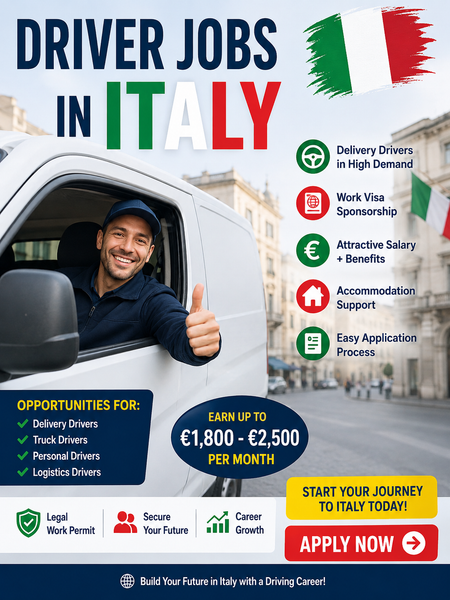
The 2026 government hiring quotas for non-EU workers (the Decreto Flussi, explained below) specifically list transport — including HGV drivers — among the sectors with the highest volume of sponsorship requests, alongside agriculture, construction, and hospitality.
Types of Driver Jobs Available in Italy
Before applying, it helps to know which category fits your license, experience, and long-term goals. The main driver job categories in Italy are:
1. Truck Driver Jobs (HGV / CE License Holders)
This is the highest-demand and generally best-paid driving category in Italy. Long-haul and international freight companies regularly recruit both EU and non-EU drivers holding a Category CE license.
Typical requirements:
- Valid CE (heavy goods) driving license
- Driver Qualification Card (CQC / “CAM”)
- Digital tachograph card
- Minimum experience, often 6 months to several years for international routes
- ADR certification is a plus for drivers transporting hazardous materials
Average salary (2026): Monthly gross pay generally ranges from around €1,800 in southern regions to €2,800–€3,000 in northern Italy (Lombardy, Veneto), where freight volume is highest. Entry-level drivers typically start between €24,000–€28,000 per year, mid-level drivers between €30,000–€37,000, and experienced drivers on international routes can reach €38,000–€45,000 or more, according to recent industry salary surveys. National collective labor agreements (CCNL) set the wage floor, and bonuses for eco-driving, mileage, and loyalty are common additions.
2. Delivery and Courier Driver Jobs
E-commerce growth has made courier and last-mile delivery driving one of the fastest-growing driver job categories in Italian cities.
Typical requirements:
- A standard Category B license (for vans) or a scooter license for food-delivery platforms
- A clean driving record
- Comfort using GPS and delivery-tracking apps
Average salary: Entry-level delivery and logistics roles typically pay between roughly €1,100 and €1,400 per month, with some positions paying partly by number of deliveries completed rather than a flat salary. These roles are considered the easiest entry point for newcomers, including those with limited Italian language skills.
3. Warehouse-to-Road Logistics Roles
Many logistics companies hire combined warehouse-and-delivery staff, especially around Milan, Turin, and Bologna’s distribution hubs. These roles often serve as a stepping stone toward a dedicated driving position once a worker gains local experience and language skills.
4. Taxi and Private Hire (NCC) Drivers
Taxi licenses in Italy are municipally regulated and often limited in number, making them harder to access for newcomers. Private hire drivers (NCC — Noleggio Con Conducente) operate under a separate, somewhat more accessible licensing system, but still require local authorization, a specific vehicle category, and, in most cities, a dedicated course and exam.
5. Bus Driver Jobs
Public and private bus companies across Italy regularly recruit Category D license holders, particularly in tourist regions and larger metropolitan transit systems. These positions typically require a CQC passenger transport qualification alongside the D license.
Can Foreigners Get Driver Jobs in Italy? Visa and Work Permit Rules
Yes — but the pathway depends on your nationality.
EU/EEA/Swiss citizens can work in Italy without a work visa and only need to register their residency once employed.
Non-EU citizens generally need employer sponsorship through Italy’s annual immigration quota system, known as the Decreto Flussi.
How the Decreto Flussi Works for Drivers
The Decreto Flussi is the Italian government’s annual (now multi-year) decree that sets how many non-EU workers may enter the country for employment. The 2026–2028 decree authorizes close to 500,000 total work-entry slots over three years, with transport — including heavy-goods drivers — named as one of the sectors receiving a meaningful share of non-seasonal work quotas, alongside agriculture, construction, and hospitality.
The process generally works like this:
- An Italian employer identifies you (or a candidate pool) and applies for a nulla osta (work authorization) during the designated application window (“click day”).
- Once approved, you apply for a National Type D work visa at the Italian consulate in your home country.
- After entering Italy, you convert the visa into a permesso di soggiorno (residence permit) at the local immigration office, which includes registering fingerprints and formal paperwork.
Because the number of available slots is limited and demand is high, being prepared with documents and having a genuine job offer in hand before the application window opens matters far more than the size of the annual quota might suggest.
Routes Outside the Decreto Flussi Quota
Higher-earning, highly qualified applicants may also qualify for an EU Blue Card, which sits outside the standard quota system and generally requires a minimum gross salary threshold in the mid-€30,000s per year — a bar more realistic for senior logistics managers than most entry-level drivers, but relevant if you’re an experienced fleet supervisor or specialized transport professional.
Important: Visa rules, quotas, and salary thresholds change from year to year. Always confirm current requirements with the Italian Ministry of Interior, an Italian consulate, or a licensed immigration professional before making relocation plans. This section is for general orientation only and is not legal or immigration advice.
Driving License Requirements: Converting a Foreign License
If you already hold a driving license from your home country, whether you can use it in Italy — or must convert or retest — depends on where it was issued:
- EU/EEA licenses are valid throughout Italy without conversion.
- Licenses from countries with a reciprocity agreement with Italy can often be converted directly, usually within a set period after establishing residency.
- Licenses from countries without a reciprocity agreement typically require passing the Italian theory and practical driving exams to obtain an Italian license, even if you already hold professional certifications like a CE or D category license abroad.
Professional truck and bus drivers should also confirm whether their Driver Qualification Card and tachograph card need to be reissued or validated under Italian/EU rules, since these are separate from the base driving license itself.
Where to Find Legitimate Driver Job Listings in Italy
To avoid scams — which are unfortunately common in the “visa sponsorship” job space — stick to verifiable channels:
- EURES, the European Union’s official job mobility portal, which lists cross-border vacancies including transport roles
- Established logistics recruitment agencies with verifiable company registration and reviews
- Direct career pages of major Italian and European transport companies
- Italian employment centers (Centri per l’Impiego)
Be cautious of any recruiter who asks for upfront payment to “guarantee” a visa or job offer — legitimate employers and licensed agencies do not require job seekers to pay for sponsorship.
Tips to Improve Your Chances of Getting Hired
- Get your CE or D license certified and translated before applying, along with any hazardous-materials (ADR) or passenger-transport certifications.
- Learn basic Italian. Even conversational-level Italian significantly widens your options, especially outside major logistics hubs.
- Target northern Italy first. Lombardy, Veneto, and Emilia-Romagna have the highest concentration of freight and logistics employers and generally pay above the national average.
- Highlight international route experience. EU driving experience is often recognized by Italian employers and can help you skip entry-level pay tiers.
- Prepare your documents early. Decreto Flussi application windows are time-limited, so employers who want to sponsor you need your paperwork ready in advance.
Frequently Asked Questions
Is it easy to get a driver job in Italy as a foreigner? It’s realistic but not automatic. EU citizens can apply freely, while non-EU citizens need an employer willing to sponsor a work permit through the Decreto Flussi quota system. Truck driving is one of the sectors most open to sponsorship due to ongoing driver shortages.
What is the average salary for a truck driver in Italy? Recent salary data puts the average gross annual salary for a truck driver in Italy at roughly €30,000–€37,000, with entry-level pay closer to €24,000–€28,000 and senior international drivers earning €38,000–€45,000 or more.
Do I need to speak Italian to work as a driver in Italy? Not always for entry-level delivery or warehouse-adjacent roles, but Italian language ability is a major advantage for truck driving, bus driving, and any customer-facing position, and is often required for taxi and NCC licensing exams.
Can I convert my foreign truck driving license in Italy? It depends on whether your country of origin has a license-reciprocity agreement with Italy. Without one, you will likely need to pass Italian driving exams even if you already hold a professional license abroad.
What is the Decreto Flussi? It’s Italy’s annual (currently multi-year, 2026–2028) government decree that sets the maximum number of non-EU citizens allowed to enter the country for seasonal, non-seasonal, and self-employed work, including transport and logistics roles.
Final Thoughts
Driver jobs in Italy — from long-haul trucking to last-mile delivery — remain in genuine demand in 2026, with pay that scales meaningfully with license category, region, and international route experience. For non-EU applicants, the visa process adds a layer of planning, but transport is consistently named as a priority sector in Italy’s work-permit quotas. The best path forward is the same regardless of nationality: get your licensing and certifications in order, target the regions with the highest demand, and apply directly through verified employers or official channels rather than unregulated middlemen.
About this guide: This article was researched and written using current (2026) labor-market data, official Italian immigration guidance summaries, and industry recruiting sources to give job seekers a practical, up-to-date starting point. It is intended for general informational purposes only and does not constitute legal, immigration, or financial advice. Requirements, quotas, and salary figures change over time — always verify current rules with the Italian Ministry of Interior, an Italian consulate, or a licensed immigration professional before making decisions.